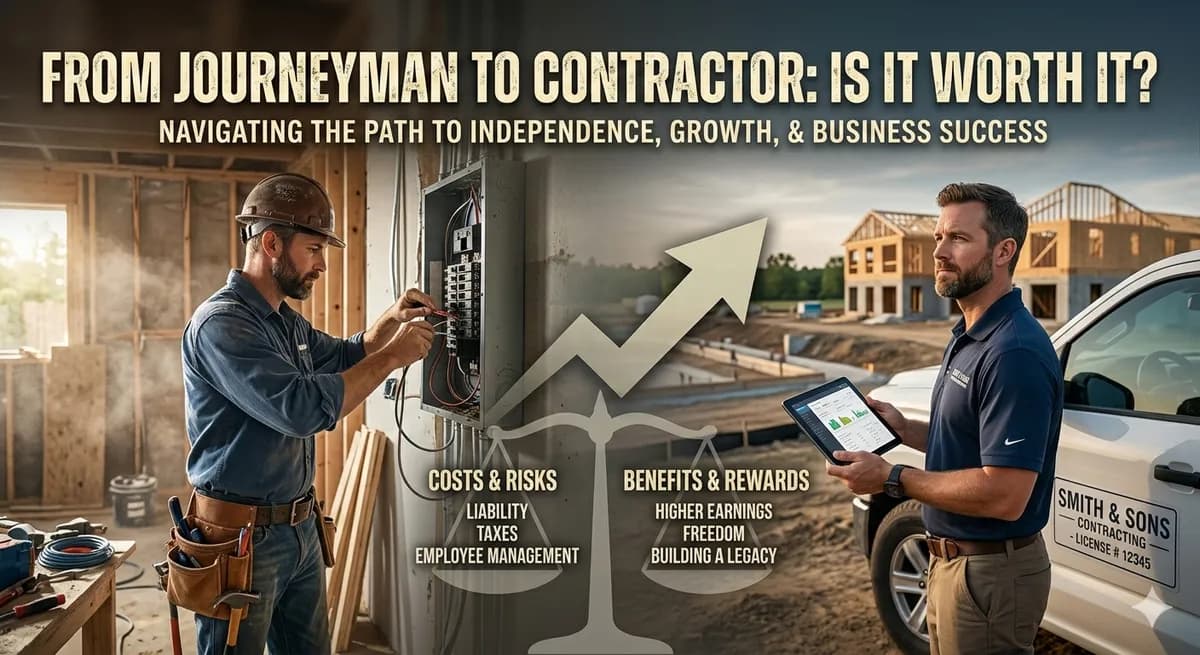
The pros and cons of leaving your steady paycheck to start your own CSLB-licensed electrical contracting business.
You've spent years working as an electrician — maybe as a journeyman or master electrician. Now you're wondering: is it worth going through the CSLB process to get your own C-10 license? Here's an honest breakdown of the pros, cons, and what to expect.
The Journey-Level Electrician vs. Licensed Contractor
A journey-level electrician works under someone else's contractor license. A C-10 licensed contractor can pull permits, bid on projects, and run their own business. The differences go beyond just a piece of paper:
- Income potential: Journey-level electricians in California typically earn $55,000-$85,000/year. Licensed C-10 contractors earn $80,000-$150,000+ depending on how they operate.
- Independence: As a licensed contractor, you choose your clients, set your prices, and control your schedule.
- Liability: As a contractor, you take on the risk. Your bond, insurance, and personal assets may be at stake if something goes wrong.
- Business responsibilities: Estimating, invoicing, marketing, employee management, tax compliance, and customer relations become your responsibility.
The Pros of Getting Your C-10 License
1. Significantly Higher Income Potential
The biggest advantage is financial. As an employee, your income is capped by your hourly rate or salary. As a contractor, your income is limited only by the number of projects you can take on and your profit margins. Many solo C-10 contractors earn $100,000-$150,000 in their first few years, and those who build crews can earn significantly more.
2. Control Over Your Career
You decide what types of projects to pursue, which clients to work with, and how to grow your business. Want to specialize in solar installations? EV charging? Commercial TI work? You're the boss. You also set your own schedule — no more being told where to show up at 6 AM.
3. Building Long-Term Wealth
A contracting business is an asset that can appreciate in value. A well-established C-10 contracting business with recurring clients and good reviews can be sold for a significant sum when you're ready to retire. Employee jobs offer no such equity.
4. Tax Advantages
Business owners have access to tax deductions not available to employees: vehicle expenses, tool purchases, home office, health insurance premiums, retirement plan contributions, continuing education, and more. A good accountant can help you legally reduce your tax burden significantly.
The Cons (Let's Be Honest)
1. No Guaranteed Paycheck
As an employee, you get paid every two weeks regardless of business conditions. As a contractor, your income depends on winning bids, collecting payments, and managing cash flow. Some months will be lean, especially when starting out.
2. Administrative Burden
Running a business means dealing with permits, inspections, insurance, taxes, bookkeeping, customer complaints, and legal compliance. Many skilled electricians aren't prepared for the amount of non-electrical work involved in running a contracting business.
3. Financial Risk
You'll need to invest in tools, a truck, insurance, bonds, and initial marketing. If a project goes wrong, you're personally liable (especially as a sole proprietor). The $25,000 contractor bond and insurance premiums are ongoing costs whether or not you're working.
4. Customer Management
Not every client is easy to work with. As a contractor, you handle complaints, collect overdue payments, manage expectations, and deal with scope creep. If customer service isn't your strength, this can be particularly challenging.
Our Honest Take
If you're a skilled electrician who's comfortable with some business risk and is willing to learn the business side, the C-10 license is absolutely worth it. The income potential and independence far outweigh the costs and challenges for most people. However, if you prefer the stability of a steady paycheck and don't want to deal with business administration, there's nothing wrong with being a highly skilled, well-paid journey-level electrician.
How to Transition Successfully
- Start part-time: Many electricians begin by taking side jobs on weekends while still employed. This builds your client base and lets you test the waters before going full-time.
- Save a financial cushion: Have at least 3-6 months of living expenses saved before going full-time. Business income can be unpredictable early on.
- Build relationships: Start networking with general contractors, property managers, and real estate agents while you're still employed. Word-of-mouth referrals are the #1 source of work for new contractors.
- Learn the business side: Take a contractor's business management course or read books on small business management. The technical skills you have are only half the equation.
Ready to Pass Your Exam?
Put your knowledge to the test. Try our free California C-10 practice test to see where you stand, or upgrade to our Premium Preparation Course for unlimited mock exams, detailed explanations, and a 100% pass guarantee.
Recommended Articles
Law & Business vs. C-10 Trade Exam: Which is Harder?
We polled 500 CSLB candidates to find out which portion of the exam gave them more trouble. The results might surprise you.
Launching Your C-10 Business: The First 30 Days
A tactical guide to launching your CSLB-licensed business: forming an LLC, getting bonds, and finding customers.
Real Talk: How Much Do C-10 Contractors Actually Make?
We break down the potential income for licensed electrical contractors in California, from solo operators to large firms.